Cycada
Cycada is a smart cycling telemetry platform that empowers everyday riders to track, analyse, and improve their rides — in real time, on any terrain, at a fraction of the cost.

Problem Statement
Cyclists in India and emerging markets struggle with prohibitively expensive commercial tracking devices, unreliable GPS in dense urban environments, and no viable indoor tracking solution. Facing gaps in affordability, accuracy, and customisability, most riders are forced to either overspend or go without data entirely.
Research Context
60–70% of Indian cyclists are priced out of commercial tracking devices like Garmin and Wahoo. Yet over 10 million bicycles are sold in India annually, with a growing urban cycling culture and zero affordable telemetry options to match.
Research Insights Metrics
₹1.5k–3k
average budget (vs. ₹20,000+ for comp.)
100%
of users reported GPS unreliability as a pain point
$200M+
addressable market in the budget cycling segment
Pain Points
Universal
GPS signal drops in dense Indian cities — 30–50% data loss in urban environments. Smartphone-based tracking drains battery within 2–3 hours. Apps crash mid-ride, losing session data entirely. No solutions work for indoor cycling or turbo trainers.
High Impact
Commercial devices are 10–15x overpriced for the target audience. Closed, proprietary ecosystems prevent customisation or upgrade. Riders have no way to compare routes, track elevation, or analyse performance trends without expensive hardware.
Role Specific User Flows
Fitness instructors need reliable indoor tracking to demonstrate progress to clients. College students want social group ride comparisons on a student budget. Tech-savvy commuters want open, hackable hardware that integrates with personal IoT setups.
Decisions Made
Mobile-First Companion App
Designed a Flutter-based cross-platform mobile application with a real-time dashboard, historical ride analysis, and CSV/Strava export — built local-first for privacy with optional cloud sync.
Tradeoffs:
Local-first architecture ensures no data loss during connectivity issues. Reduces cloud infrastructure cost.
Constraints:
BLE pairing friction was a discovered pain point in user testing — required firmware redesign for one-tap auto-connect.
Result:
Real-time dashboard, ride history, and data export delivered with a
System Usability Scale score of 82/100 — exceptional for a hardware prototype.
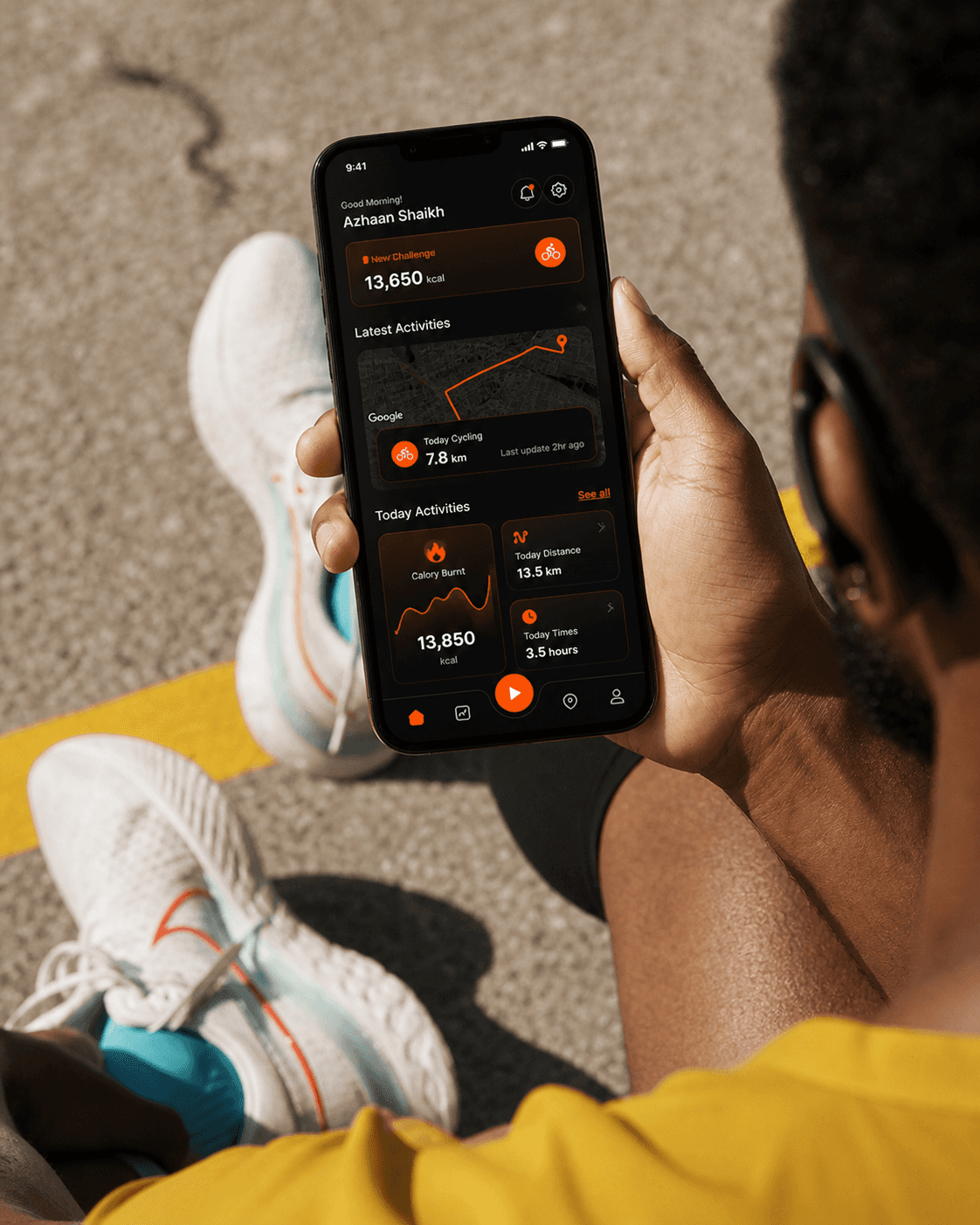
Ride Dashboard: Designed for the Road
A central live speedometer anchors the UI, with key stats visible at a glance like Real Time speed, Accurate Calories, Incline, Route map & Music controls. Everything is accessible in a single view, without breaking focus.
Tradeoffs:
Consolidating five distinct data types onto one screen required a disciplined visual hierarchy as the rider will look at screen for very short spans of time.
Constraints:
Music controls required OS-level media session integration (Android MediaSession / iOS MPRemoteCommandCenter). Map rendering needed lightweight tile caching to avoid lag on mid-range phones.
Result:
One distraction-minimised screen replaces five separate actions—speed, calories, incline, navigation, and music—into a single glance. Riders feel more in control, with less distraction.

3D-Printed PLA Enclosure for Weather Resistance
Cycada's electronics module is housed in a custom-designed, 3D-printed PLA enclosure, engineered specifically for handlebar mounting. The shell is designed with sealed cable entries and a snug component fit to protect against rain, dust, road splash, and vibration — critical for India's monsoon conditions.
Tradeoffs:
PLA is lightweight, affordable to produce, and easy to iterate but, is often brittle if improperly printed, giving it lower shock absorbing strength.
Constraints:
Standard PLA softens at high temperatures (~60°C). PETG is offered as an alternative material for users in extreme heat climates.
Result:
A durable, weather-resistant module that survives Indian monsoons, dusty commutes, and daily road vibration — making Cycada a genuinely all-weather product without relying on expensive injection-moulded casings.

Indoor Ride Tracking
A cloud or local contract CMS with version control, filters, tags, and smart folders. All contracts indexed and searchable by semantics, with custom tags, contract types, and metadata for organization.
Tradeoffs:
Complex interface if too many organization tools.
Constraints:
Needs to support high-volume contract search/filtering. Must allow secure tagging and retrieval
Result:
Tag-based, semantically indexed CMS with smart folders, aiding contract tracking, audits, and sorting across departments.
Outcome Post Testing
82 / 100
System Usability Scale score
up to ±3%
speed accuracy vs. Garmin Edge 530 benchmark
80%
reduction in cost vs. entry-level commercial cycling computers
100%
of beta users continued daily use beyond the testing period
Cycada
Cycada is a smart cycling telemetry platform that empowers everyday riders to track, analyse, and improve their rides — in real time, on any terrain, at a fraction of the cost.
HCI Hybrid Product Design
2025
Problem Statement
Cyclists in India and emerging markets struggle with prohibitively expensive commercial tracking devices, unreliable GPS in dense urban environments, and no viable indoor tracking solution. Facing gaps in affordability, accuracy, and customisability, most riders are forced to either overspend or go without data entirely.
Research Context
60–70% of Indian cyclists are priced out of commercial tracking devices like Garmin and Wahoo. Yet over 10 million bicycles are sold in India annually, with a growing urban cycling culture and zero affordable telemetry options to match.
Research Insights Metrics
₹1.5k–3k
average user budget (vs. ₹20,000+ for commercial devices)
100%
of users reported GPS unreliability as a pain point
$200M+
addressable market in the budget cycling segment
Pain Points
Universal
GPS signal drops in dense Indian cities — 30–50% data loss in urban environments. Smartphone-based tracking drains battery within 2–3 hours. Apps crash mid-ride, losing session data entirely. No solutions work for indoor cycling or turbo trainers.
High Impact
Commercial devices are 10–15x overpriced for the target audience. Closed, proprietary ecosystems prevent customisation or upgrade. Riders have no way to compare routes, track elevation, or analyse performance trends without expensive hardware.
Role Specific User Flows
Fitness instructors need reliable indoor tracking to demonstrate progress to clients. College students want social group ride comparisons on a student budget. Tech-savvy commuters want open, hackable hardware that integrates with personal IoT setups.
Decisions Made
Mobile-First Companion App
Designed a Flutter-based cross-platform mobile application with a real-time dashboard, historical ride analysis, and CSV/Strava export — built local-first for privacy with optional cloud sync.
Tradeoffs:
Local-first architecture ensures no data loss during connectivity issues. Reduces cloud infrastructure cost.
Constraints:
BLE pairing friction was a discovered pain point in user testing — required firmware redesign for one-tap auto-connect.
Result:
Real-time dashboard, ride history, and data export delivered with a
System Usability Scale score of 82/100 — exceptional for a hardware prototype.
Ride Dashboard: Designed for the Road
A central live speedometer anchors the UI, with key stats visible at a glance like Real Time speed, Accurate Calories, Incline, Route map & Music controls. Everything is accessible in a single view, without breaking focus.
Tradeoffs:
Consolidating five distinct data types onto one screen required a disciplined visual hierarchy as the rider will look at screen for very short spans of time.
Constraints:
Music controls required OS-level media session integration (Android MediaSession / iOS MPRemoteCommandCenter). Map rendering needed lightweight tile caching to avoid lag on mid-range phones.
Result:
One distraction-minimised screen replaces five separate actions—speed, calories, incline, navigation, and music—into a single glance. Riders feel more in control, with less distraction.
3D-Printed PLA Enclosure for Weather Resistance
Cycada's electronics module is housed in a custom-designed, 3D-printed PLA enclosure, engineered specifically for handlebar mounting. The shell is designed with sealed cable entries and a snug component fit to protect against rain, dust, road splash, and vibration — critical for India's monsoon conditions.
Tradeoffs:
PLA is lightweight, affordable to produce, and easy to iterate but, is often brittle if improperly printed, giving it lower shock absorbing strength.
Constraints:
Standard PLA softens at high temperatures (~60°C). PETG is offered as an alternative material for users in extreme heat climates.
Result:
A durable, weather-resistant module that survives Indian monsoons, dusty commutes, and daily road vibration — making Cycada a genuinely all-weather product without relying on expensive injection-moulded casings.
Indoor Ride Tracking
A cloud or local contract CMS with version control, filters, tags, and smart folders. All contracts indexed and searchable by semantics, with custom tags, contract types, and metadata for organization.
Tradeoffs:
Complex interface if too many organization tools.
Constraints:
Needs to support high-volume contract search/filtering. Must allow secure tagging and retrieval
Result:
Tag-based, semantically indexed CMS with smart folders, aiding contract tracking, audits, and sorting across departments.
Outcome Post Testing
82 / 100
System Usability Scale score
up to ±3%
speed accuracy vs. Garmin Edge 530 benchmark
80%
reduction in cost vs. entry-level commercial cycling computers
100%
of beta users continued daily use beyond the testing period
Cycada
Cycada is a smart cycling telemetry platform that empowers everyday riders to track, analyse, and improve their rides — in real time, on any terrain, at a fraction of the cost.
HCI Hybrid Product Design
2024
Problem Statement
Cyclists in India and emerging markets struggle with prohibitively expensive commercial tracking devices, unreliable GPS in dense urban environments, and no viable indoor tracking solution. Facing gaps in affordability, accuracy, and customisability, most riders are forced to either overspend or go without data entirely.
Research Context
60–70% of Indian cyclists are priced out of commercial tracking devices like Garmin and Wahoo. Yet over 10 million bicycles are sold in India annually, with a growing urban cycling culture and zero affordable telemetry options to match.
Research Insights Metrics
₹1.5k–3k
average user budget (vs. ₹20,000+ for commercial devices)
100%
of users reported GPS unreliability as a pain point
$200M+
addressable market in the budget cycling segment
Pain Points
Universal
GPS signal drops in dense Indian cities — 30–50% data loss in urban environments. Smartphone-based tracking drains battery within 2–3 hours. Apps crash mid-ride, losing session data entirely. No solutions work for indoor cycling or turbo trainers.
High Impact
Commercial devices are 10–15x overpriced for the target audience. Closed, proprietary ecosystems prevent customisation or upgrade. Riders have no way to compare routes, track elevation, or analyse performance trends without expensive hardware.
Role Specific User Flows
Fitness instructors need reliable indoor tracking to demonstrate progress to clients. College students want social group ride comparisons on a student budget. Tech-savvy commuters want open, hackable hardware that integrates with personal IoT setups.
Decisions Made
Mobile-First Companion App
Designed a Flutter-based cross-platform mobile application with a real-time dashboard, historical ride analysis, and CSV/Strava export — built local-first for privacy with optional cloud sync.
Tradeoffs:
Local-first architecture ensures no data loss during connectivity issues. Reduces cloud infrastructure cost.
Constraints:
BLE pairing friction was a discovered pain point in user testing — required firmware redesign for one-tap auto-connect.
Result:
Real-time dashboard, ride history, and data export delivered with a
System Usability Scale score of 82/100 — exceptional for a hardware prototype.
Ride Dashboard: Designed for the Road
A central live speedometer anchors the UI, with key stats visible at a glance like Real Time speed, Accurate Calories, Incline, Route map & Music controls. Everything is accessible in a single view, without breaking focus.
Tradeoffs:
Consolidating five distinct data types onto one screen required a disciplined visual hierarchy as the rider will look at screen for very short spans of time.
Constraints:
Music controls required OS-level media session integration (Android MediaSession / iOS MPRemoteCommandCenter). Map rendering needed lightweight tile caching to avoid lag on mid-range phones.
Result:
One distraction-minimised screen replaces five separate actions—speed, calories, incline, navigation, and music—into a single glance. Riders feel more in control, with less distraction.
3D-Printed PLA Enclosure for Weather Resistance
Cycada's electronics module is housed in a custom-designed, 3D-printed PLA enclosure, engineered specifically for handlebar mounting. The shell is designed with sealed cable entries and a snug component fit to protect against rain, dust, road splash, and vibration — critical for India's monsoon conditions.
Tradeoffs:
PLA is lightweight, affordable to produce, and easy to iterate but, is often brittle if improperly printed, giving it lower shock absorbing strength.
Constraints:
Standard PLA softens at high temperatures (~60°C). PETG is offered as an alternative material for users in extreme heat climates.
Result:
A durable, weather-resistant module that survives Indian monsoons, dusty commutes, and daily road vibration — making Cycada a genuinely all-weather product without relying on expensive injection-moulded casings.
Indoor Ride Tracking
A cloud or local contract CMS with version control, filters, tags, and smart folders. All contracts indexed and searchable by semantics, with custom tags, contract types, and metadata for organization.
Tradeoffs:
Complex interface if too many organization tools.
Constraints:
Needs to support high-volume contract search/filtering. Must allow secure tagging and retrieval
Result:
Tag-based, semantically indexed CMS with smart folders, aiding contract tracking, audits, and sorting across departments.
Outcome Post Testing
82 / 100
System Usability Scale score
up to ±3%
speed accuracy vs. Garmin Edge 530 benchmark
80%
reduction in cost vs. entry-level commercial cycling computers
100%
of beta users continued daily use beyond the testing period